People like to think they make purchasing decisions logically. They compare prices, research features, read reviews, and choose the option that makes the most sense.
But buying decisions are rarely based on logic alone.
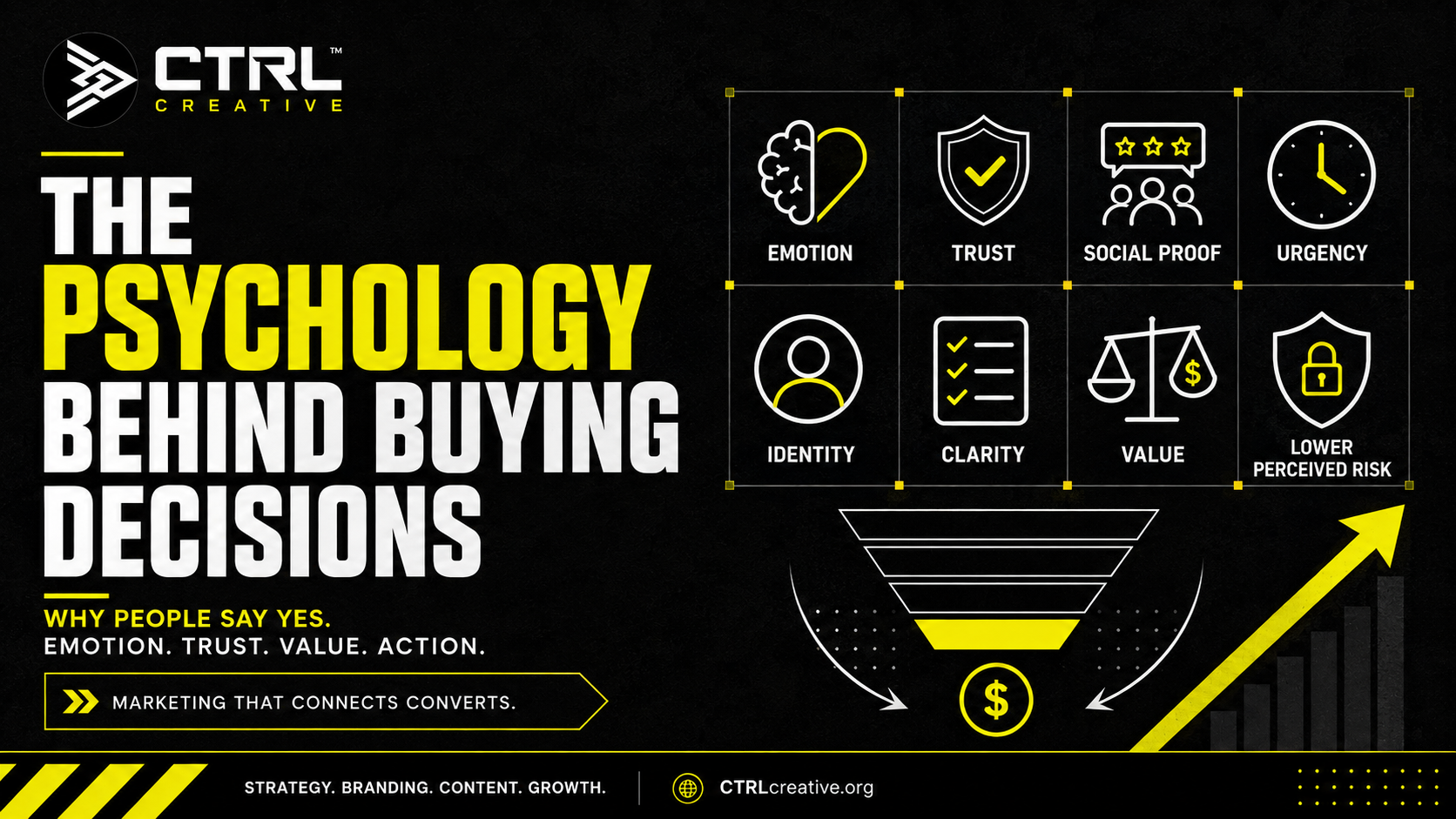
Emotion, trust, perception, identity, social proof, urgency, and perceived value all influence whether someone decides to buy—or keeps scrolling.
Understanding the psychology behind buying decisions can help businesses create stronger marketing, improve conversions, communicate value more clearly, and build brands people feel confident choosing.
The goal isn’t manipulation.
It’s understanding what customers need in order to feel comfortable saying yes.
What Is Buyer Psychology?
Buyer psychology is the study of how emotions, thoughts, perceptions, behaviors, and outside influences affect purchasing decisions.
Customers aren’t simply buying products or services.
They’re buying outcomes.
They’re buying convenience.
Confidence.
Status.
Security.
Relief.
Transformation.
A customer hiring a marketing agency isn’t necessarily buying social media posts or strategy sessions.
They may actually be buying the feeling that their business is finally moving forward.
Understanding that difference changes how you market.
1. People Buy Emotionally and Justify Logically
Emotion plays a powerful role in purchasing decisions.
A customer may feel attracted to a particular brand because it feels trustworthy, exciting, sophisticated, relatable, exclusive, or familiar.
Afterward, they use logical reasons to justify the decision.
They might say:
“The quality was better.”
“The reviews were stronger.”
“The package included more.”
“The price made sense.”
Those things matter—but the emotional connection often happened first.
Strong marketing combines the two.
Create an emotional reason to care and a logical reason to feel confident buying.
2. Trust Reduces Buying Resistance
Trust is one of the strongest factors influencing consumer behavior.
Customers naturally hesitate when they don’t know what to expect.
Your marketing should reduce that uncertainty.
Trust can be created through testimonials, reviews, case studies, educational content, transparent communication, professional branding, consistent messaging, and proof of previous results.
Your brand itself also communicates trust.
If your business looks inconsistent, outdated, confusing, or inactive online, customers may subconsciously wonder whether the customer experience will feel the same way.
Branding isn’t only about aesthetics.
It helps establish credibility before a customer ever speaks to you.
3. Customers Want to Avoid Risk
Almost every purchase carries some form of perceived risk.
For a $10 purchase, that risk might be minimal.
For a $5,000 service, home renovation, wedding photographer, consultant, or long-term contract, the risk feels much greater.
Customers may wonder:
What if it doesn’t work?
What if I waste my money?
What if I choose the wrong company?
What if I regret the decision?
Marketing can reduce perceived risk through clear processes, FAQs, testimonials, examples of previous work, case studies, transparent expectations, strong communication, and guarantees when appropriate.
The safer the decision feels, the easier it becomes to move forward.
4. Social Proof Helps People Feel Confident
Humans naturally look at what other people are doing when making decisions.
That is why social proof is so powerful.
Reviews, testimonials, user-generated content, customer photos, case studies, awards, media mentions, client logos, sold-out events, and high-demand services all signal that other people trust the business.
Potential customers begin thinking:
“If other people had a good experience, I probably will too.”
Instead of constantly telling customers how good your business is, let your customers help prove it.
5. Scarcity and Urgency Encourage Action
People often value opportunities more when availability feels limited.
That is the psychology behind scarcity.
Examples include:
Limited appointments.
Registration deadlines.
Seasonal offers.
Limited inventory.
Early-bird pricing.
Only a few remaining spots.
Scarcity can prevent someone from continuously delaying a decision.
Urgency gives them a reason to act now.
But there is an important distinction:
Real urgency builds conversions. Fake urgency destroys trust.
If an offer truly expires Friday, say so.
If there are genuinely three openings left, communicate it.
Do not manufacture scarcity simply to pressure customers.
6. People Buy Things That Reinforce Their Identity
Buying decisions are often connected to identity.
People choose brands that reflect who they are—or who they want to become.
Someone may purchase premium fitness equipment because they see themselves as disciplined and health-conscious.
Someone may hire a luxury photographer because they value art, experience, and exclusivity.
Someone may invest in professional branding because they want their business to feel established and credible.
Great marketing doesn’t only explain what a product does.
It helps customers picture the type of person they become after choosing it.
7. Clarity Makes Decisions Easier
Confusion kills conversions.
If someone lands on your website and cannot quickly determine what you do, who you help, why you’re different, how much value you provide, or what they should do next, they are more likely to leave.
Customers don’t want to decode your business.
Strong marketing creates clarity.
Your offer should answer:
What is this?
Is it for me?
Why should I care?
Why should I choose you?
What happens next?
The easier those questions are to answer, the less friction exists between interest and purchase.
8. Customers Evaluate Value, Not Just Price
Price and value are not the same thing.
A $500 service can feel expensive if the customer does not understand its value.
A $5,000 service can feel reasonable if the expected outcome feels significantly more valuable.
That is why businesses should avoid competing exclusively on price.
Communicate the transformation.
Show the expertise.
Explain the experience.
Demonstrate the result.
Customers become more willing to invest when they understand what they receive in return.
9. Familiarity Creates Preference
Have you ever chosen a brand simply because you recognized the name?
That isn’t accidental.
Repeated positive exposure increases familiarity.
And familiarity often increases trust.
A potential customer may see your Reel today, another post next week, find one of your blogs through Google, see someone recommend you, and finally visit your website a month later.
None of those individual interactions may create the sale.
Together, they can.
That is why marketing consistency matters.
Customers frequently need multiple touchpoints before they are ready to buy.
10. Customers Need to See Themselves in Your Marketing
People pay attention when messaging feels personally relevant.
Generic marketing speaks to everyone.
Strong marketing makes the right customer think:
“They’re talking about me.”
A business owner overwhelmed with marketing should recognize that frustration in your messaging.
A homeowner considering remodeling should see their concerns addressed.
A couple looking for a photographer should recognize the emotions surrounding their wedding.
Understanding your target audience allows you to create messaging around their actual problems, fears, desires, questions, and goals.
That is far more powerful than simply listing your services.
11. Too Many Choices Can Stop the Sale
More options do not always create more sales.
Sometimes they create decision fatigue.
When customers face too many packages, services, upgrades, add-ons, and pricing structures, making a decision becomes mentally exhausting.
They may delay choosing altogether.
Simplify the process.
Create clear packages.
Highlight the most popular option.
Recommend the best solution based on the customer’s needs.
Make deciding feel easy.
12. People Buy Outcomes, Not Features
This is one of the most important principles in marketing.
People rarely care about the feature as much as they care about what the feature does for them.
A customer doesn’t necessarily want SEO.
They want to be found on Google.
They don’t necessarily want social media management.
They want visibility, consistency, leads, and growth.
They don’t necessarily want a new website.
They want credibility and more customers.
Instead of marketing only the service, market the outcome the service creates.
That is where stronger messaging begins.
How to Use Buyer Psychology Ethically
Understanding psychology should make marketing more useful—not more manipulative.
Effective marketing helps the right customer recognize the right solution.
Businesses can use buyer psychology ethically by creating transparency, reducing confusion, communicating honestly, showing genuine social proof, explaining value clearly, addressing concerns, and giving customers enough information to make confident decisions.
The strongest customer relationship begins when the experience promised in the marketing matches the experience delivered afterward.
Why Buyer Psychology Matters for Your Marketing Strategy
When businesses struggle to convert attention into customers, the problem isn’t always visibility.
Sometimes people are seeing the business.
They simply haven’t been given enough reason to choose it.
Understanding the psychology behind buying decisions can improve your branding, website messaging, social content, offers, calls to action, sales process, customer experience, email campaigns, and overall marketing strategy.
Instead of simply asking:
“How can we sell this?”
Ask:
“What does our customer need to understand, feel, and believe before they’re ready to buy?”
That question creates much stronger marketing.
Attention Is Only the Beginning
Getting someone’s attention is valuable.
But attention alone does not create revenue.
Customers take action when they feel understood, trust the business, recognize the value, believe the risk is manageable, and can clearly picture the outcome.
That is the psychology behind buying decisions.
At CTRL Creative, we help businesses create marketing strategies built around more than looking good. Through branding, content, SEO, positioning, social media, and growth strategy, we help brands turn attention into intentional action.
Because strong marketing shouldn’t just get noticed.
It should make choosing you make sense.
Control the Outcome.
Leave a Reply